Part I: The Signals and Structure of Conflict
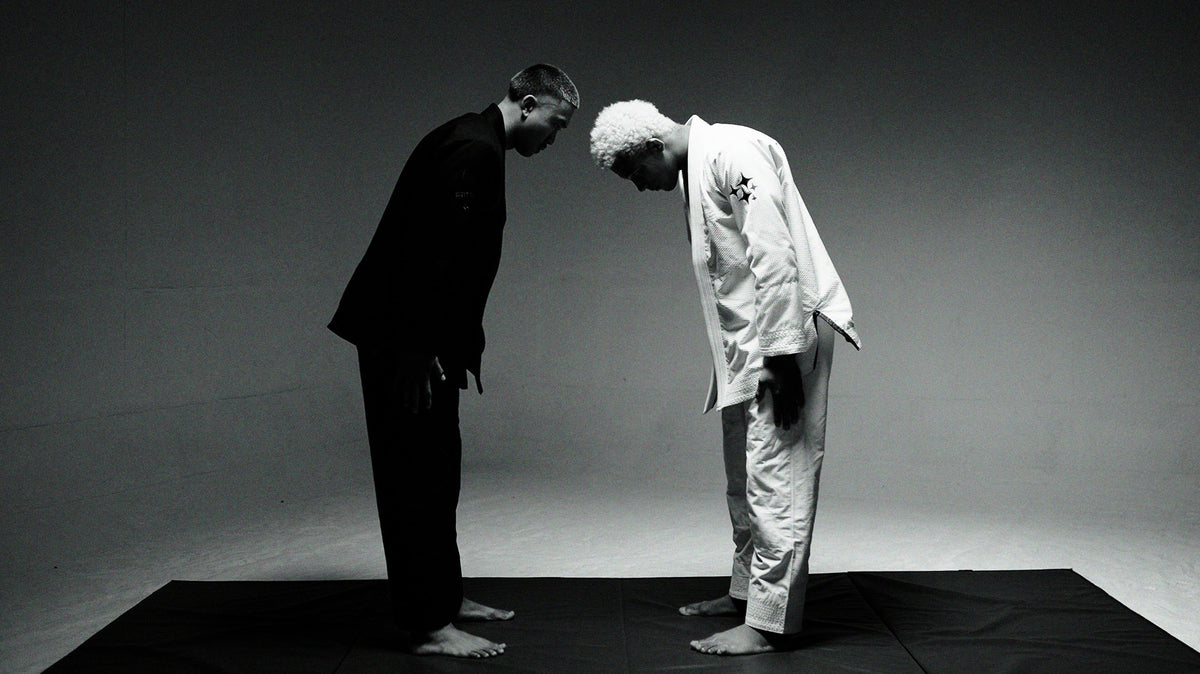
In martial arts, we spend years learning how to handle combat. BJJ competitions start when the referee says, “Combate”, right? There’s pressure, force, adrenaline, pride, and someone actively, often painfully, trying to make us give up. And we pay to do that! So it’s interesting that we’re bad at handling conflict, especially the interpersonal kind. We will let a 220lb purple belt crush us in side control, but ask us to address a moment of tension in the gym and suddenly we’re all “Oh no, I’m fine, everything’s fine, nothing to see here. Water break?”
This blog idea hit us after listening to NPR’s Life Kit interview with Priya Parker about her new book The Art of Fighting. Spoiler: she’s not talking about physical fighting. She’s talking about conflict resolution and the kind of conflict that keeps communities honest, relationships real, and group gut-feelings from quietly festering in silence. As we listened, we kept thinking: Wait… this is what happens on the mat, with fewer words and more sweat.

Let’s define some terms:
- Combat is physical. It’s consensual, structured, time-limited, and governed by rules. You know when the round starts, when it ends, and what counts as a tap.
- Interpersonal conflict is social. It’s emotional, ambiguous, and often unspoken. No timer, no ref, no “reset.”
- Intrapersonal conflict is internal. It’s the fight between your fear and your values, your ego and your goals, your discomfort and your desire to grow.
- Community conflict is cultural. It’s the friction that arises when norms shift, expectations clash, or someone’s behavior bumps into the group’s identity.
Different arenas, same nervous system.
Whether it’s an ankle-lock attempt or a disagreement about gym etiquette, your brain is running the same basic software: threat detection, emotional regulation, and “please don’t embarrass me in front of people I respect.” The science is simple. Pressure reveals truth. Priya Parker’s five takeaways map in parallel to Jiu-Jitsu training.
We’re going to explore conflict vs. combat, why communities need friction to stay authentic, and how the skills we practice on the mat can make us better humans off the mat.
Conflict doesn’t start as an argument. It starts as a signal. Priya Parker’s first takeaway reframes conflict not as a failure, but as information: a moment of misalignment telling you, “Hey… something here needs attention.” The same kind of signal your brain detects when you’re mad at your bestie for always being late, or when an arm is tightening around your neck. Thanks to the sympathetic nervous system (See blog: Discomfort Isn’t a Virtue - It’s a Skill) and its fight-flight-freeze circuitry, interpersonal conflict shows up physically.
- Sweaty palms
- Elevated heart rate
- Dry mouth
- Tension in your shoulders or jaw
- That “I want to leave” feeling
The default response to any conflict is the same: Flee. Avoid. Escape the discomfort. But in BJJ, you can’t flee. You’re literally training your body to stay put under pressure and to breathe, regulate, and respond instead of panic. That’s why Jiu-Jitsu becomes such a powerful metaphor for conflict resolution: you’re practicing the same skills just on a mat, in a uniform with bad hair and lots of sweat.
On the mat, we treat signals as useful. If someone’s shoulder pressure spikes, if their energy shifts, if your ribs start complaining, you don’t ignore it. You adjust. You get curious. You respond. Interpersonal conflict works the same way. That awkward moment after a roll, the weird vibe in a group chat, the tension in class. These aren’t threats. They’re signals. They’re the relational equivalent of “your guard is about to get passed.”
In a gym community, with your tribe, these signals matter even more. Good training partners pick up on them. They notice when you stiffen, when your breathing changes, when your nervous system flips into survival mode. Combat sports create somatic empathy: you literally feel each other’s tension. That sensitivity is what makes a gym feel safe, inclusive, and connected.
Communities have conflict signals too: small cliques forming, people avoiding certain partners, norms drifting, tension everyone feels but nobody names. These aren’t signs of collapse, but early warnings. Healthy communities respond to them before they morph into resentment. Conflict is feedback. Combat is feedback. Both tell the truth.
One of Priya Parker’s biggest points, and the second takeaway, is that healthy conflict doesn’t create chaos; it creates structure and clarity. Most people assume conflict is messy, emotional, and unpredictable. That’s unhealthy conflict. Healthy conflict is the
interpersonal version of a well-run sparring round: clear expectations, shared rules, and a mutual understanding of what we’re doing here. On the mat, structure makes combat safe. We have rounds, taps, positional starts, intensity agreements, and etiquette. These scaffolds let us apply pressure without hurting each other or blowing up the vibe.
Conflict needs the same scaffolding. When something feels off - a miscommunication, a boundary crossed, a moment of tension - naming it creates clarity. It tells the other person what’s happening, what you need, and what the “rules of engagement” are. It’s the conversational equivalent of saying, “Let’s start from guard,” or “Let’s go light,” or “Reset.”
Healthy conflict gives relationships and communities the same benefits structure gives combat:
- Predictability: people know what to expect
- Safety: nobody gets blindsided
- Clarity: the real issue becomes visible
- Direction: you know what you’re working toward
Athletes often understand this intuitively: Structure doesn’t limit intensity - it channels it. A round timer doesn’t give you an out; it helps you focus. A tap doesn’t make you weak; it keeps you safe. A reset doesn’t interrupt the roll; it improves it.
Healthy conflict works the same way.
When you name the tension, set the frame, and clarify the purpose, you’re not “starting drama”; you’re creating the conditions for honesty. You’re giving the relationship or the community a container, just like the mat gives combat a container. Friction that is buried becomes resentment. Resentment becomes distance. Distance becomes “Hey, where did that person go? They stopped showing up.” Clarity is kindness.
The second lesson is simple: Combat needs structure. Conflict needs structure.
Priya Parker’s third takeaway is simple: choose your battles. Not every moment of friction deserves a full-blown conversation, but some do, especially if you care about the relationship, the group, or the culture you’re part of. This is where martial artists have an advantage: we understand selective engagement. We don’t try to win every microexchange in a roll. We conserve energy for the moments that matter.
Conflict works the same way. There is an internal calculus.
Before stepping into a conflict, Parker suggests asking yourself three questions:
- How much do I care about this person or this group?
- Can I keep meaningfully engaging without addressing this?
- Will speaking up actually change anything?
This is the interpersonal BJJ version of deciding whether to fight for a sweep or bail and reguard. It’s strategic. It’s intentional. It’s not about “being right”; it’s about protecting the training relationship or the community from slow erosion.
Here’s the trap: fear masquerades as strategy. Most people don’t “choose their battles.” They avoid them. That avoidance is its own form of intrapersonal conflict. Fear dresses itself up as maturity: “It’s not worth it,” “I don’t want drama,” “I’ll just let it go.” But your nervous system knows you’re lying. That poke from the sympathetic nervous system: sweaty palms, elevated heart rate, the urge to flee. That isn’t “letting it go.” It’s internal conflict between your discomfort and your values. Avoidance is how resentment grows roots.
On the mat, avoidance doesn’t get you anywhere. If you never let people mount you, you never learn to escape from side control. If you never roll with bigger partners, you never learn pressure management. If you never address a training partner’s mismatched intensity, you risk getting injured. Avoidance feels safe in the moment but costs you long-term growth.
Conflict is the same. If you never address misalignment, you lose trust. If you never speak up, you lose authenticity. If you never clarify boundaries, you lose safety. In a gym tribe, this principle is crucial. Some conflicts aren’t worth the energy - a one-off awkward comment, a misread cue, a moment of tension that resolves itself. But others are:
- repeated boundary pushing
- unsafe rolling behavior
- cultural drift
- exclusionary cliques
- communication breakdowns
- simmering resentment
These are the interpersonal equivalents of someone repeatedly cranking your neck or ignoring taps. You don’t ignore these conflicts because you care about the culture, the safety, and the people inside it.
Choosing your battles isn’t about avoiding conflict - it’s about engaging the right conflict. The conflicts that protect the relationship. The ones that strengthen the community. The ones that keep the gym aligned, safe, and authentic. Combat teaches you when to fight and when to flow. Conflict teaches you when to speak and when to let go.
Both require courage. Once you understand the signals and structure of conflict, the next step is learning how to engage it with skill and intention. Look for Part 2: How to Engage Conflict with Skill and Intention